Context: This vegetarian dashi forms the foundation for many dishes in the Muromachi-period Crown Tournament Feast, including O-zoni (Rice Cake Soup). Dashi is the clear stock that underpins nearly every element of honzen ryori dining — simple, elegant, and full of umami.
Context: In Muromachi-period formal dining (honzen ryori), o-zoni is a welcoming soup — a composed bowl of mochi (rice cake), seasonal vegetables, and savory elements in a clear broth. The feast version here uses square kaku-mochi in vegetarian kombu-shiitake dashi so more diners could enjoy it. Regional variations exist, but rice cake is essential.
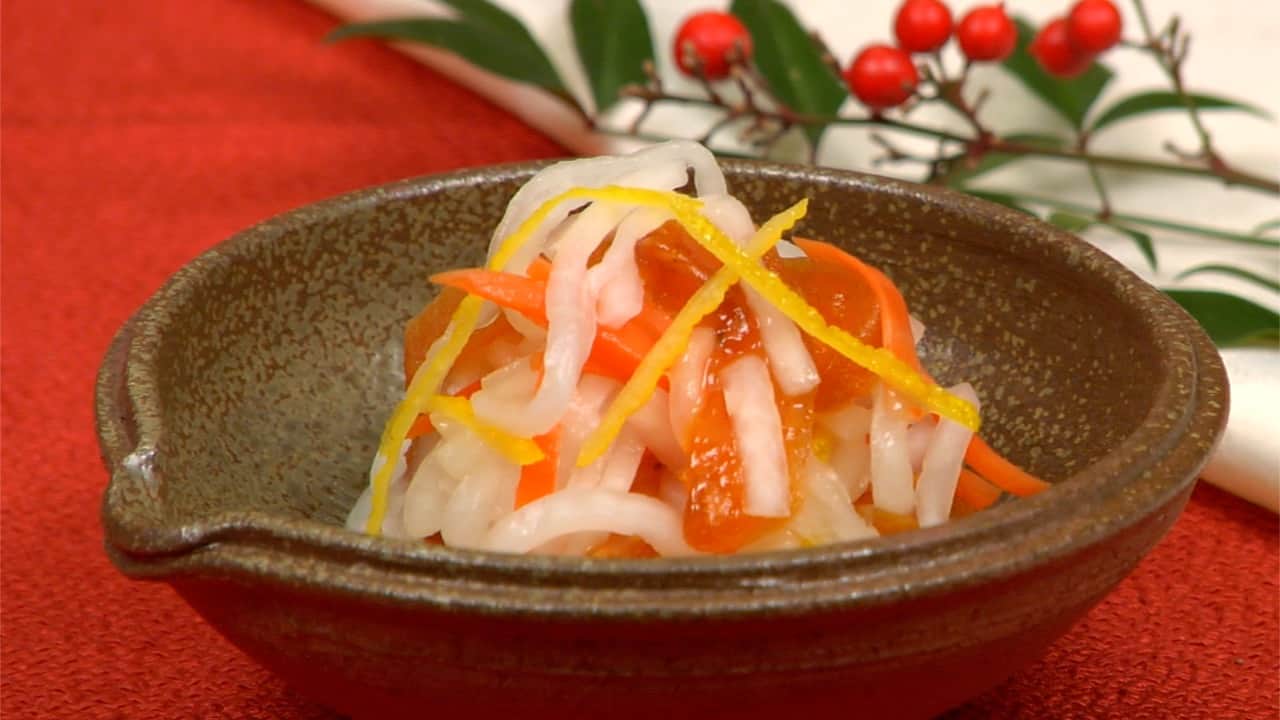
A symbolic red-and-white salad of daikon and carrot lightly pickled in sweetened vinegar — a bright accent to the first tray of the Muromachi-period Honzen Ryori feast.
Kohaku-namasu represents more than flavor: the colors themselves are auspicious. Red symbolizes joy and protection from evil; white represents purity and celebration.
The dish was introduced from China during the Nara period and became a central feature of Osechi Ryori — the traditional New Year’s cuisine of the Heian court.
Crown Tournament 2019: Mikawa ae (Miso and Sesame Cucumber Pickles)
From the Muromachi-period Honzen Ryori menu served at Crown Tournament (October 19, 2019): crisp cucumbers dressed in a miso–sesame emulsion, bright with rice vinegar and shiso.
Mikawa ae — Photo courtesy of Avelyn Grene (Kristen Lynn)
Originally published 11/25/2019 Updated 11/6/2025
This beautifully simple dish was a standout on the first tray. The balance of salt, sweetness, and umami offered a refreshing counterpoint to the grilled and simmered items.
The redaction draws on Sengoku Daimyo’s Redactions of Japanese Dishes, aligning with techniques seen in late medieval Japan.
“.lvj. Charlette” – Pork Custard, Harleian MS. 279 (c.1430)Photo: Give It Forth
Originally published 1/16/2017 Updated 10/31/2025
Among the most puzzling entries in Harleian MS. 279 is “.lvj. Charlette” — a firm, sliceable custard of milk, pork or veal, eggs, and ale. It sits at the edge of pudding, cheese, and meat pie: a now-rare style sometimes dubbed a “hard custard.”
The name is often glossed as “meat-milk” (with char “flesh/meat” and –lette “milk”), and similar “milk-meat” recipes turn up in The Forme of Cury and A Noble Boke off Cookry. Medieval diners would have found it robust and nourishing; to modern eyes it can look… challenging. But as a piece of culinary archaeology, it’s priceless.
🥕 Dietary notes: contains meat & dairy; not vegetarian. Gluten-free if using GF ale. Try a mushroom variant for testing.
Lost Techniques Spotlight: Curds-by-Ale & the “Hard Custard” Family
Ale-curdling, not sweet-setting: Here, hot milk is curdled by adding beaten eggs and a little ale as the acid; the eggs help bind fine curds around minced meat.
Kin to egg-cheese & posset: The method sits between fresh cheese (acid + heat) and early egg-thickened drinks (posset). Pressing the curds overnight makes a sliceable loaf.
Savory custards fade: By the 16th–17th c., European tastes shift toward sweet, cream-based, gently baked custards. Savory “hard custards” like charlette mostly vanish.
Service tip: Medieval directions say to press the loaf and reheat slices in hot broth. This keeps texture tender and adds flavor.
Feast planning: Make a day ahead so it presses and chills fully. Slice cold; reheat in beef or capon broth at service.