} -->

Basic Recipe – Vegetarian Dashi (Kombu–Shiitake Stock)


Basic Recipe – Vegetarian Dashi (Kombu–Shiitake Stock)


Ingredients for vegetarian dashi: kombu, shiitake mushrooms, and clear golden broth
Ingredients for Vegetarian Dashi – kombu, shiitake mushrooms, and a clear golden broth.
Image generated by ChatGPT (© 2025, used with permission).

Context: This vegetarian dashi forms the foundation for many dishes in the Muromachi-period Crown Tournament Feast, including O-zoni (Rice Cake Soup). Dashi is the clear stock that underpins nearly every element of honzen ryori dining — simple, elegant, and full of umami.

Crown Tournament 10/19/2019: O-zōni (Rice Cake Soup – Mochi and Simmered Vegetables with Fish-Paste Cake)


O-zoni (rice cake soup) from the Crown Tournament 2019 feast
O-zoni – Rice Cake and Simmered Vegetables with Fish-Paste Cake
Photo: Avelyn Grene (Kristen Lynn)

Originally published 1/29/2020 Updated 11/6/2025

Kitchen Adventures – Crown Tournament 10/19/2019: O-zoni (Rice Cake Soup)

Context: In Muromachi-period formal dining (honzen ryori), o-zoni is a welcoming soup — a composed bowl of mochi (rice cake), seasonal vegetables, and savory elements in a clear broth. The feast version here uses square kaku-mochi in vegetarian kombu-shiitake dashi so more diners could enjoy it. Regional variations exist, but rice cake is essential.

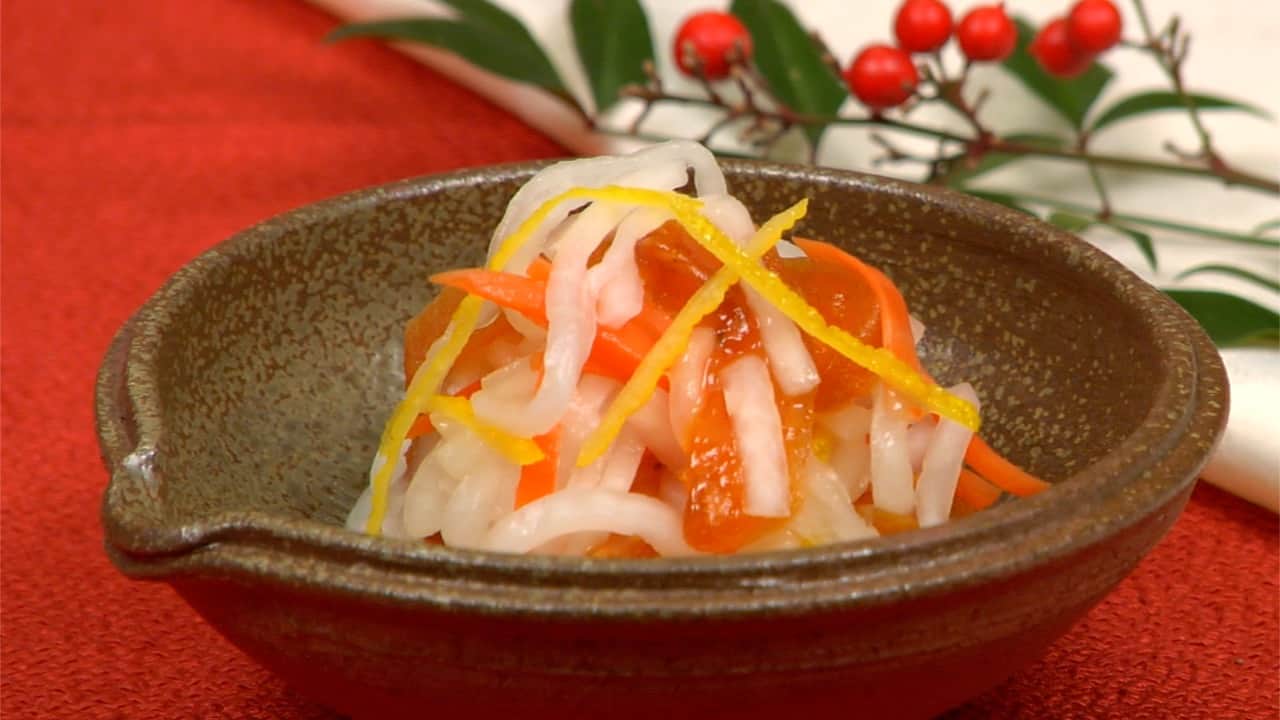
Kohaku-namasu (Daikon and Carrot Salad)

Kitchen Adventures – Crown Tournament 2019: Kohaku-namasu (Daikon and Carrot Salad)

Kohaku-namasu – daikon and carrot salad lightly pickled in sweet vinegar
Kohaku-namasu (Daikon and Carrot Salad)
Photo © Cooking with Dog, used under CC BY-NC 4.0.

Originally published 11/25/2019 Updated 11/6/2025

A symbolic red-and-white salad of daikon and carrot lightly pickled in sweetened vinegar — a bright accent to the first tray of the Muromachi-period Honzen Ryori feast.

Kohaku-namasu represents more than flavor: the colors themselves are auspicious. Red symbolizes joy and protection from evil; white represents purity and celebration. The dish was introduced from China during the Nara period and became a central feature of Osechi Ryori — the traditional New Year’s cuisine of the Heian court.

Crown Tournament 10/19/2019 Mikawa ae (Miso & Sesame Cucumber Pickles)

Crown Tournament 2019: Mikawa ae (Miso and Sesame Cucumber Pickles)

From the Muromachi-period Honzen Ryori menu served at Crown Tournament (October 19, 2019): crisp cucumbers dressed in a miso–sesame emulsion, bright with rice vinegar and shiso.

Mikawa ae – miso and sesame dressed cucumber slices, as served at Crown Tournament 2019
Mikawa ae — Photo courtesy of Avelyn Grene (Kristen Lynn)

Originally published 11/25/2019 Updated 11/6/2025


This beautifully simple dish was a standout on the first tray. The balance of salt, sweetness, and umami offered a refreshing counterpoint to the grilled and simmered items. The redaction draws on Sengoku Daimyo’s Redactions of Japanese Dishes, aligning with techniques seen in late medieval Japan.